Tech Insights | YAKBOS Technologies
Artificial Intelligence is no longer a futuristic concept — it has become a core driver of modern custom software development. In 2026, AI is fundamentally reshaping how applications are designed, built, tested, deployed, and maintained.
Companies leveraging AI-powered development processes are achieving dramatic gains in speed, quality, cost-efficiency, and innovation.This article explores 12 practical business use cases showing exactly how AI is transforming custom software development and delivering measurable results.
1. Intelligent Code Generation & Auto-Completion
AI tools now generate entire code modules, functions, and boilerplate from natural language descriptions. Developers describe what they need, and AI produces production-ready code in seconds. This accelerates development cycles by 40-60% for repetitive tasks while allowing senior engineers to focus on complex architecture and business logic.
2. AI-Powered Requirements Analysis
AI systems analyze business documents, user stories, and meeting transcripts to automatically generate technical specifications, user stories, and architecture diagrams. This reduces the gap between business needs and technical implementation, minimizing costly miscommunications.
3. Automated Code Review and Quality Assurance
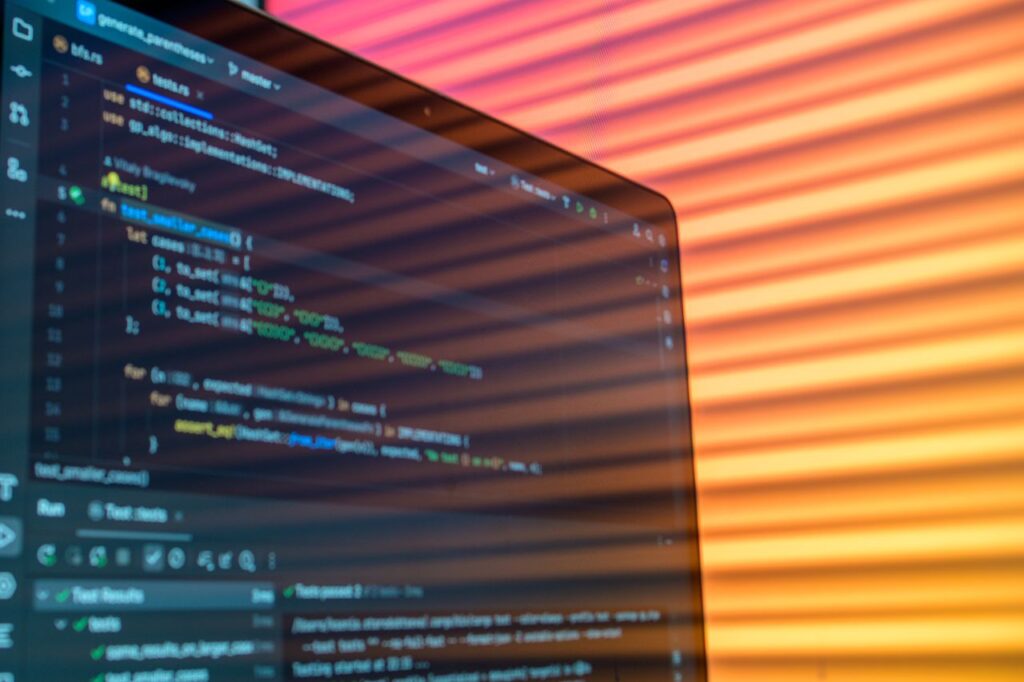
AI performs instant code reviews, detecting bugs, security vulnerabilities, performance issues, and style inconsistencies before human reviewers see the code. This leads to cleaner, more maintainable software and significantly fewer production bugs.
4. Predictive Testing & Test Case Generation
AI automatically creates comprehensive unit, integration, and regression test cases from code or requirements. It can also predict high-risk areas likely to fail, enabling smarter, more efficient testing strategies that cut QA time dramatically.
5. Intelligent Bug Detection and Fixing
Advanced AI models scan codebases to identify hidden bugs, memory leaks, and security flaws. Many systems can even suggest or automatically apply fixes, reducing debugging time from days to hours.
6. Personalized User Experience Development
AI analyzes user behavior patterns in real-time to help developers build adaptive interfaces that evolve based on individual preferences, improving engagement and retention in custom applications.
7. Smart DevOps and Automated Deployment
AI optimizes CI/CD pipelines by predicting build failures, automatically scaling infrastructure, and choosing the best deployment strategies. This results in faster, more reliable releases with minimal downtime.
8. Legacy System Modernization
AI assists in migrating old codebases to modern architectures by automatically translating legacy code, identifying dependencies, and suggesting optimal refactoring approaches. This dramatically reduces the time and risk involved in modernization projects.
9. Natural Language to Code Interfaces
Business users and non-technical stakeholders can describe features in plain English, and AI generates functional prototypes or code snippets. This democratizes development and speeds up iteration cycles.
10. AI-Driven Performance Optimization
AI continuously monitors applications in production and recommends or implements optimizations for speed, resource usage, and scalability — often in real time.
11. Enhanced Security and Threat Detection
AI-powered tools proactively scan for vulnerabilities, detect anomalous behavior, and strengthen security protocols throughout the development lifecycle, making custom software more resilient against cyber threats.
12. Intelligent Documentation & Knowledge Management
AI automatically generates and updates technical documentation, API references, and user manuals as code changes. It also creates searchable knowledge bases that help new developers onboard faster.

Business Impact: Why Companies Are Adopting AI in Custom Development
Organizations implementing these AI capabilities are seeing:
- 50%+ reduction in development time
- 30-60% lower costs
- Significantly improved code quality and security
- Faster time-to-market for new features and products
- Better scalability and maintainability
The Future of AI in Custom Software Development
As AI tools continue to evolve, the role of developers is shifting from writing every line of code to architecting intelligent systems, overseeing AI agents, and focusing on high-value innovation.
Companies that embrace AI-augmented development will maintain a massive competitive advantage.
Ready to Transform Your Custom Software Projects with AI?Partner with expert teams that combine deep software engineering experience with cutting-edge AI capabilities to build smarter, faster, and more efficient solutions tailored to your business needs.
Comments